
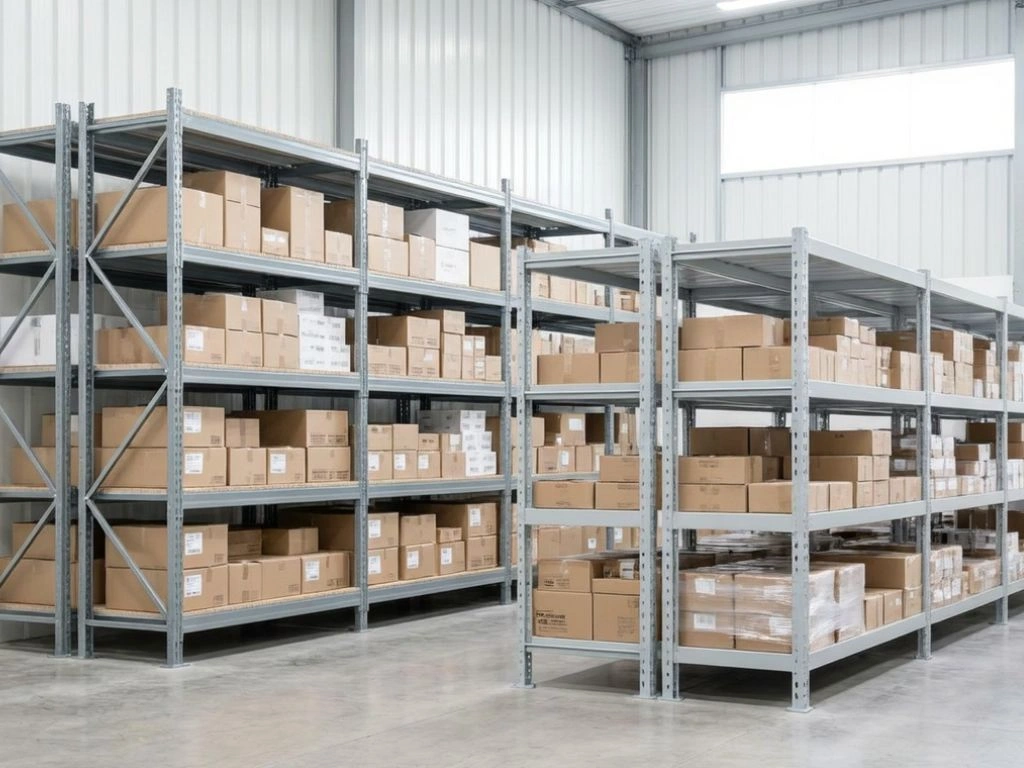
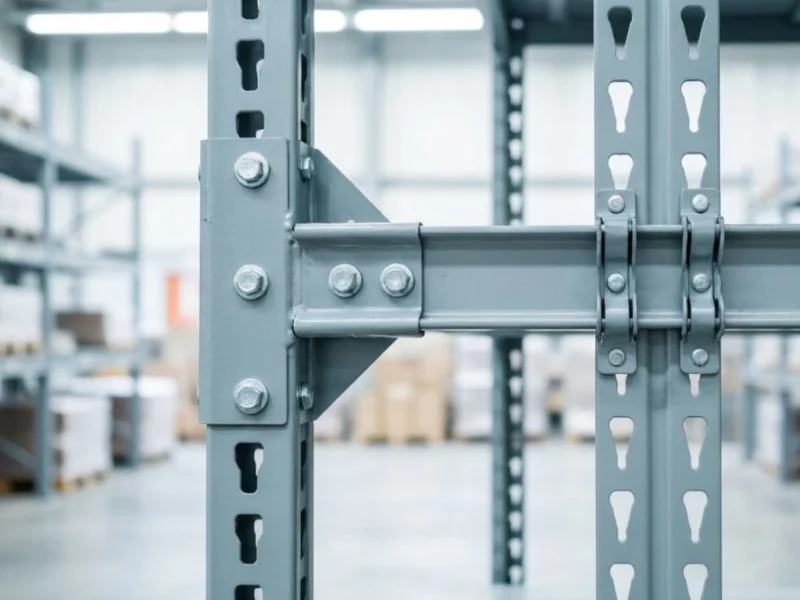
Bolted shelving uses nuts, bolts and corner gussets to fasten shelves to vertical uprights. Boltless shelving uses rivets or clips that slot into teardrop-shaped holes no tools needed. Both store the same goods, but they suit very different applications. The right choice depends on what you are storing, how heavy it is, and how often your layout changes.
“Choosing the wrong shelving system is a more expensive mistake than most businesses expect. Here’s how to get it right the first time.”
Shelving is one of the most common storage decisions South African warehouses, storerooms, and retail operations face. Get it right and you gain an efficient, organised operation. Get it wrong and you end up with overloaded shelves, wasted space, or a system you cannot adapt as your stock mix changes. This guide covers the key differences, the trade-offs, and the questions to ask before you buy.
What Is Bolted Shelving?
Bolted shelving is assembled using nuts, bolts, washers and corner gussets to fix horizontal shelves to vertical angle posts. Once assembled, the result is a rigid, heavy-duty structure suited to high-load environments think machinery parts, bulk stock, or dense inventory in a warehouse or factory setting.
Standard bay heights are 1,829 mm (1.8 m), 2,134 mm (2.1 m), and 2,438 mm (2.4 m), with taller configurations available on request. Load capacity varies by configuration confirm your UDL (uniformly distributed load) per shelf level with your supplier before specifying.
Advantages of Bolted Shelving
- High load capacity — built for heavy-duty applications, including machinery parts and bulk inventory
- Structural rigidity — the bolted connection creates a solid, stable bay that resists racking forces
- Long service life — robust steel construction withstands demanding environments over many years
- Heavy-duty suitability — the preferred choice where loads are heavy, irregular, or both
Disadvantages of Bolted Shelving
- Slower to assemble — requires correctly sized wrenches and spanners and takes longer per bay
- Less flexible — adjusting shelf heights requires tools and partial disassembly
- Not suitable for retail or office environments where aesthetics matter
What Is Boltless Shelving?
Boltless shelving also called rivet shelving or clip shelving uses rivets or clips that slot and lock into teardrop or keyhole-shaped holes in the upright. There are no nuts or bolts. A single bay can be assembled in approximately 10 to 15 minutes without tools, though a rubber mallet helps seat the shelves cleanly.
The boltless design also produces a cleaner, more minimal look. This makes it the preferred choice for offices, retail displays, and front-of-house storage where visual appeal matters alongside function. Standard heights are typically up to 1,829 mm (1.8 m).
Advantages of Boltless Shelving
- Fast assembly — 10 to 15 minutes per bay, tool-free, reducing installation time and cost
- Easy reconfiguration — shelf heights adjust quickly without tools as stock profiles change
- Better aesthetics — cleaner appearance suits retail, office, and light commercial environments
- Lower upfront cost — generally priced lower per bay than bolted equivalents
Disadvantages of Boltless Shelving
- Lower load capacity — best suited to light to moderate loads; not designed for heavy industrial use
- Less stable under heavy loads — the rivet connection is not as rigid as a bolted joint
- Height limited — standard boltless systems typically do not exceed 1.8 m
- Shelf position is fixed by rivet placement — increments are determined by the upright, not freely adjustable
Bolted vs Boltless Shelving: Side-by-Side Comparison
| Factor | Bolted Shelving | Boltless Shelving |
| Load capacity | High — suited to heavy industrial loads | Light to moderate — not for heavy-duty use |
| Structural rigidity | Very stable — rigid bolted connection | Moderate — less stable under heavy or uneven loads |
| Assembly | Slower — requires wrenches and spanners | Fast — 10 to 15 min per bay, largely tool-free |
| Adjustability | Requires tools and partial disassembly | Quick and easy — no tools needed |
| Max height | Up to 2.4 m standard; taller on request | Typically up to 1.8 m |
| Aesthetics | Industrial appearance | Cleaner, more minimal look |
| Best environment | Warehouse, factory, storeroom | Office, retail, light commercial, home |
| Cost per bay | Generally higher | Generally lower |
How to Choose the Right Shelving for Your Application
Before specifying either system, work through these four questions:
What are you storing and how heavy is it?
If loads exceed light to moderate weight machinery parts, bulk stock, heavy inventory bolted shelving is the correct choice. Boltless shelving is not engineered for heavy industrial loads.
How often will your layout change?
If stock profiles change regularly or you need to reconfigure shelf heights frequently, boltless shelving is faster and easier to adjust. Bolted systems require tools and time for any reconfiguration.
What environment is the shelving going into?
For a warehouse or factory floor, bolted shelving is the industry standard. For a retail display, office storeroom, or home garage, boltless shelving is more appropriate both for aesthetics and scale.
What is your installation timeline?
Boltless shelving can be assembled quickly by your own team. Bolted shelving takes longer and benefits from professional installation to ensure correct assembly and load integrity.
“The most common mistake we see is businesses choosing boltless shelving because it’s cheaper upfront, then overloading it within six months. If you’re storing anything heavier than light to moderate stock, bolted shelving will outlast and outperform boltless every time.”
— Heinrich, Technical Expert, Spode Storage Solutions
Spode Shelving Solutions
Spode Storage Solutions supplies both bolted and boltless shelving across South Africa, with offices in Durban (Pinetown) and Johannesburg (Roodepoort). Every system is specified to your load requirements, space dimensions, and budget not a generic off-the-shelf recommendation.
Browse our bolted shelving range or boltless shelving range for specifications, or visit our industrial shelving overview to compare all available shelving types for your application.
Not sure which system is right for your facility? Spode’s team will assess your space, load profile, and budget, then recommend the correct solution.
Request a Site Assessment
Spode will visit your warehouse or storeroom, assess your storage requirements, and recommend the right shelving system for your application.
Call Durban: +27 (31) 263 0055 | Call Johannesburg: +27 (11) 100 4772
Or request your assessment online
Frequently Asked Questions
What is the main difference between bolted and boltless shelving?
Bolted shelving uses nuts, bolts and corner gussets to fix shelves to uprights, creating a rigid, high-load structure suited to heavy industrial use. Boltless shelving uses rivets or clips that slot into teardrop-shaped holes, making it faster to assemble and easier to reconfigure but with lower load capacity. The core difference is structural: bolted systems are built for durability under heavy loads; boltless systems are built for flexibility and speed.
Which shelving type is stronger bolted or boltless?
Bolted shelving is stronger. The bolted connection between shelf and upright creates a rigid structure capable of carrying heavy loads machinery parts, bulk inventory, and high-density stock. Boltless shelving is engineered for light to moderate loads and is not suitable for heavy industrial applications. If in doubt about your load requirements, ask your supplier to confirm the UDL (uniformly distributed load) per shelf level before purchasing.
Can boltless shelving be used in a warehouse?
Yes, but only for light to moderate loads. Boltless shelving works well in warehouse offices, picking areas for small parts, and light stockrooms where loads are manageable and layout flexibility matters. For heavy inventory, pallet-compatible storage, or high-density industrial applications, bolted shelving or pallet racking is the correct choice. Using boltless shelving beyond its rated load capacity is a safety risk and a SEMA-SARI guideline violation.
How long does it take to install bolted vs boltless shelving?
Boltless shelving installs significantly faster approximately 10 to 15 minutes per bay, largely tool-free, with a rubber mallet recommended to seat shelves. Bolted shelving requires wrenches and spanners and takes longer per bay due to the nut-and-bolt assembly process. For large installations, professional assembly is recommended for both systems to ensure correct load distribution and structural integrity.
Which shelving system is better value for money?
It depends on the application. Boltless shelving has a lower cost per bay and faster installation time, making it better value for light-duty applications where flexibility matters. Bolted shelving costs more upfront but provides superior structural performance and longevity in heavy-duty environments making it better value over the long term if loads are high. Choosing boltless shelving to save money on a heavy-duty application typically results in premature failure and replacement costs that exceed the original saving.
Spode Storage Solutions provides site assessments to help South African businesses specify the right shelving system for their load requirements and budget. Contact our Durban or Johannesburg office to arrange a no-obligation visit.